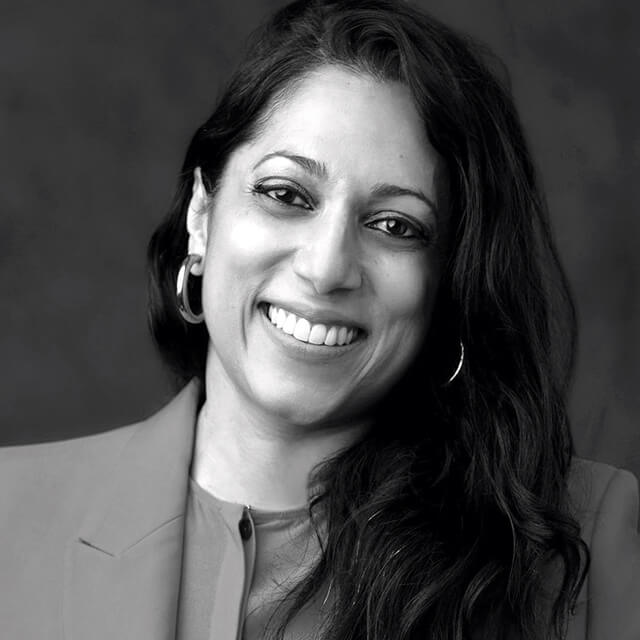
A guest post by Penny Abeywardena, host of Power Play: Soft Power Unpacked and Fellow-in-Residence at the NYU McSilver Institute
We tend to picture power as something visible. A title. A budget. A vote. A seat at a table, usually filled by people who have sat there before.
By that measure, the communities most affected by poverty are described almost entirely by what they lack. Under-resourced. Underserved. Underrepresented. The word that keeps repeating is under.
But spend time in a community that has been asked to survive without enough, and you learn that another thing is also true. People build power anyway. They build it through trust, through relationships, through culture and care, through the ability to draw people toward one another when institutions have failed to.
That power is harder to count. It is not imaginary. It has a name: soft power. And learning to name it and use it on purpose is one of the most underestimated tools we have for disrupting generational poverty.
I want to be precise about that claim, because it is easy to misinterpret.
What soft power is, and what it is not
The term comes from the political scientist Joseph Nye, who used it to explain something traditional thinking kept missing. Nations do not only get what they want through hard power, the leverage of money and force. They also get it through attraction: through credibility, culture, values, and the ability to make others want the outcomes they want.
While that idea was born in international relations, among nation-states and diplomats, I turn that lens to the individual and community level. Because soft power is also how an organizer turns private frustration into public action, how a teacher or a neighbor becomes trusted enough to move people who answer to no formal authority, and how communities generate pressure long before formal systems decide to listen.
Here is the line I do not want anyone to cross: soft power is not a substitute for money, rights, services, policy, or structural change. Communities should not have to rely on trust and improvisation because systems ignored or underinvested in them. Naming the influence communities and individuals do have is not the same as excusing the conditions that made that influence necessary.
Soft power is leverage on the existing system, not a replacement for what the system owes. It is how a community turns what it already holds into pressure on the people and institutions that hold what it needs: trust, credibility, narrative, relationships, and moral standing.
That also separates soft power from ideas it is often confused with. Social capital describes the web of relationships a community holds. Organizing is one tactic for activating it. Soft power is the strategic capacity underneath both: the ability to convert trust, narrative, and standing into deliberate outcomes toward a specific goal.
The difference between having relationships and knowing how to mobilize them is the difference between social capital and soft power. And that capacity has never been distributed the way hard power has. Money and institutional access were concentrated away from the communities most affected by poverty and racism, by design. The capacity for influence was not. In many cases, it was built most skillfully in exactly the places that had the least access to everything else.
The power that was always there
I learned to see this in my own family before I had any language for it. My maternal grandparents sheltered Tamils in Colombo during a period of ethnic violence. They had no army, no budget, and no official standing that would have protected them if they had been caught. What they had was trust, relationships, courage, and moral clarity strong enough that others were willing to risk something alongside them.
That is soft power in its most urgent form. It was real, and it was consequential, precisely because it did not depend on the hard power they were never going to be given.
That story taught me to recognize the pattern everywhere. Mutual aid networks that move food and rent before any agency can respond. Tenants organizing against conditions a landlord assumed no one would challenge. Parents who learn to be heard by systems built not to hear them. Frontline workers who know that a program does not become effective simply because evidence says it should. It becomes effective when the people it is meant to reach believe it can be trusted.
None of this is soft power as metaphor. It is soft power as method, practiced by people who were never invited into the rooms where the other kind of power gets handed out.
And the results are measurable, not only moving. Consider community health workers, the trusted neighbors hired to connect low-income families to a health system many of them have good reason to distrust. They carry no clinical authority. Their value is soft power: shared experience and credibility no institution can manufacture. One such community health worker model, IMPaCT, has been tested in three randomized trials with low-income, uninsured, and Medicaid patients. It improved health outcomes and reduced hospitalizations, and an analysis in Health Affairs projected a return of $2.47 to Medicaid for every dollar invested. The intervention was not a new drug or a new device. It was trust, deployed on purpose, by people from the community itself. That is terrain McSilver knows well from its work in behavioral health and frontline systems.
It also makes a point I most want anti-poverty work to absorb, and one McSilver already lives. Communities are not only recipients of expertise. They are holders of it. McSilver describes its work as guided by the underserved and under-resourced communities it serves, and that is exactly the right instinct, because those communities know where trust has broken, which interventions feel extractive and which feel real, and who carries influence in a neighborhood and why. A field that studies communities without recognizing what they already command will keep designing solutions that test well in a journal and land badly on a street.
The connective tissue, and why it belongs at McSilver
Poverty is not only a material condition. It is produced and reproduced by systems: housing, education, health, employment, child welfare, behavioral health, and public policy, and by the structural racism woven through them. Material resources matter enormously, and so does evidence, and so does good policy. But none of those things move through the world on their own.
Research can show what is true without that truth becoming action. A policy can be well designed and still fail if the people it targets do not trust the system delivering it. A program can be evidence-based and still fall short if it does not understand the relationships, narratives, and lived realities that shape whether people will use it, believe it, and carry it forward. Often the people who do carry it forward are the ones closest to the work: clinicians, case managers, teachers, service providers, advocates, and families.
Soft power is the connective tissue between knowledge and change. It is how evidence becomes persuasive, how policy becomes legitimate, how a program earns the trust it needs to work at all.
Poverty is also sustained by narrative. Every society tells stories about who is capable, who is deserving, who is credible, who gets to lead. Those stories are not decorative. They shape funding, sympathy, policy, and institutional behavior. Hard power enforces them. Soft power can rewrite them. When a community asserts its own account of its dignity and capacity, it is changing what becomes possible.
This is why this conversation belongs at the McSilver Institute, which is committed to disrupting generational poverty through research, policy, and action. McSilver has never been siloed in academic theory alone. Its model is built around translating research into action, developing evidence-based interventions, supporting frontline systems, and strengthening the conditions that allow knowledge to reach the lives it concerns. That is an action question, and the path from evidence to action runs straight through influence, trust, and the ability to challenge harmful narratives without losing sight of the people most affected. Soft power is not adjacent to that mission. It is part of how the mission advances.
Why this matters now
There is a reason to have this conversation in 2026 rather than treat it as timeless.
The systems that touch poor communities are being automated quickly. Benefits eligibility, hiring, fraud flags, case triage, risk assessment, service referrals: more of the decisions that shape a low-income family’s life are being handed to tools that can process information at speed but cannot earn a person’s trust.
A model can deny a claim in a millisecond. It cannot sit with a family, understand why they stopped showing up, and bring them back.
As automation spreads, the human capacities at the center of soft power do not become less valuable. They become scarce, and therefore decisive. The ability to build trust, exercise judgment, understand context, and move people is precisely what machines cannot do. That makes it the part of the work most worth protecting and teaching, and the most dangerous to automate away.
McSilver’s own AI Hub is studying how artificial intelligence systems can advance equity rather than erode it, particularly in relation to poverty, race, and public health. That question is, at bottom, a soft power question: who is trusted, who is believed, whose data is used, whose experience is legible, and who gets to shape the tools that will shape their lives. If AI is going to run inside systems that affect poor and marginalized communities, then technical design cannot be the only conversation. We also have to ask how trust is built, how accountability is maintained, how communities participate, and how human judgment stays central when the system is built to accelerate past what people can contest.
Where Power Play comes in
That is the conviction behind Power Play: Soft Power Unpacked, the podcast I host in partnership with the McSilver Institute. We work at the institutional crossroads of influence, evidence, and collective change. From diplomacy and grassroots organizing to the power of pop culture, we unpack how soft power shapes hearts, minds, and movements.
What we are really doing is making influence visible.
Most people who wield that influence well cannot tell you how, because no one ever named it for them as a skill. That is especially true for those who have led without formal authority. The podcast asks people who embody soft power to show their work: how they earned trust, shifted a narrative, moved an institution, an audience, or a neighborhood. The goal is not to admire powerful people from a distance. It is to build a public literacy of influence, so listeners can learn how influence works from the people who embody it, and recognize the same capacities in themselves and the communities they come from.
Power Play is, in the end, for anyone who has been doing this work by instinct for years: holding a neighborhood together, getting heard in rooms designed to ignore them, translating systems for people those systems have failed, and never once being told that what they do is power. My hope is that listeners leave with language they can use immediately, in organizing, in service, in advocacy, in policy, and in the everyday work of being believed.
From survival to strategy
The most radical idea here is also the simplest. The communities our society has most consistently underestimated have spent generations developing the very form of power that matters most for lasting change. They led without permission, built trust without titles, and moved people without money.
Naming that, studying it with rigor, and putting it to work alongside the research and policy McSilver is known for is how survival becomes strategy. It is not a replacement for resources. It is often how resources, rights, and real change become possible at all.
Hearts, minds, and movements. That is where power actually lives. The work now is to make sure the people who have always carried this power know exactly what they hold, and to help the next generation learn to use it on purpose.
Poverty can be inherited. So can power. Our work is to grow the second.
Power Play: Soft Power Unpacked is produced in partnership with the NYU McSilver Institute for Poverty Policy and Research. New episodes are available wherever you listen to podcasts.